
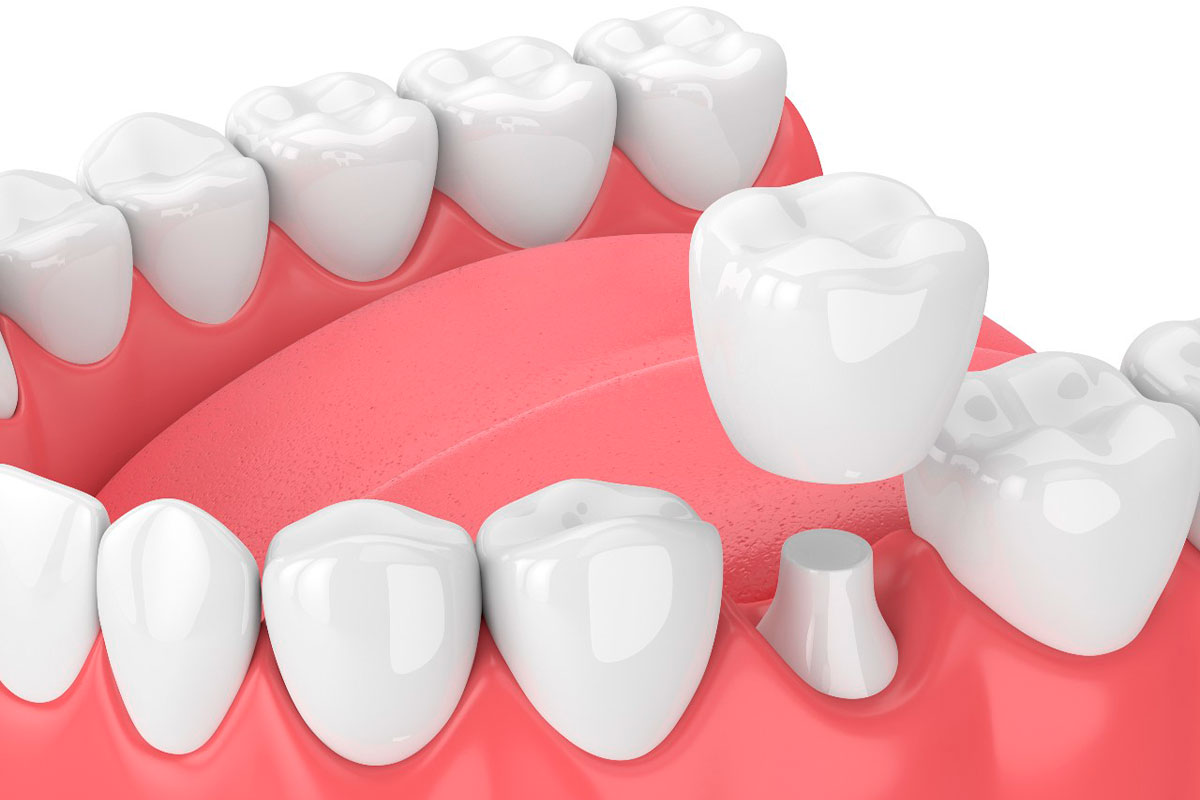
When Does a Tooth Need a Crown
If your dentist has recommended a crown for a tooth that already has a large filling, one of the first questions you may ask is: when does a tooth need a crown instead of another filling? The answer depends less on the size of the old restoration alone and more on what remains underneath and around it.
Dentists evaluate how much healthy enamel and dentin remain, whether the tooth contains cracks, how much force it receives during chewing, the condition of previous restorations, and whether the pulp or root canal system has been affected. A tooth that looks similar to another heavily restored tooth can require a very different treatment once those structural details are examined.
This distinction matters because restorative dentistry is not simply about replacing material that has been lost. In many cases, the larger question is whether the remaining tooth can continue to handle normal biting forces predictably
Why Another Filling Is Not Always Enough
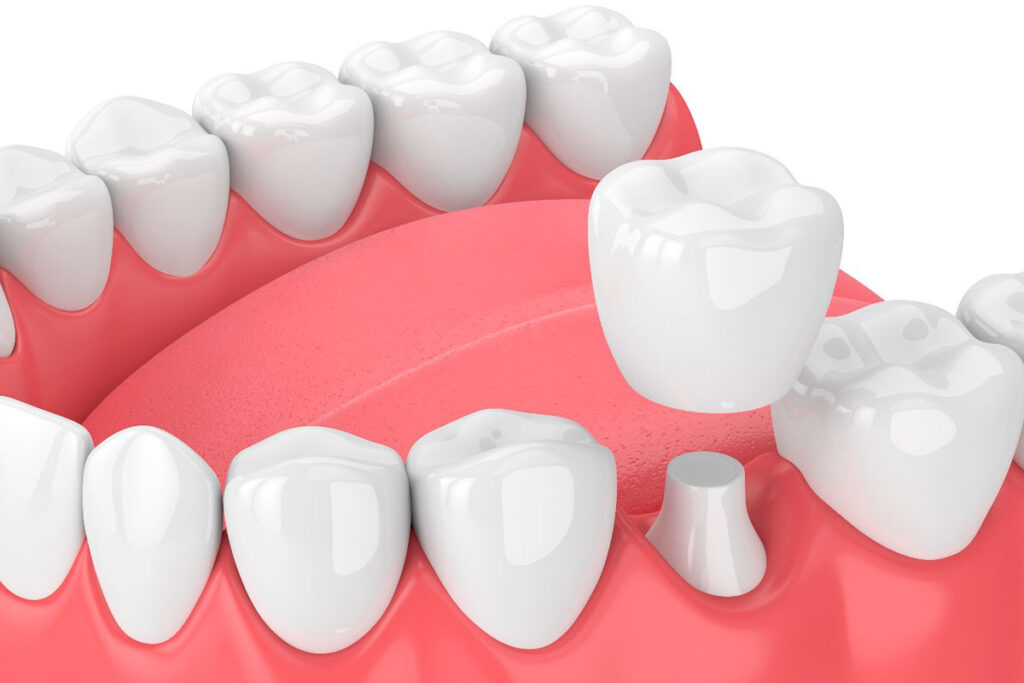
A filling replaces an area of tooth structure that has been removed because of decay, fracture, or an older restoration. When a relatively contained portion of the tooth is affected and enough strong surrounding structure remains, a direct restoration may be an appropriate way to restore form and function.
The situation changes as more natural tooth structure is lost. A large restoration can leave cusps thinner, walls less supported, and the tooth more vulnerable to flexing or fracture under repeated chewing forces. The question then becomes whether adding more filling material would restore predictable strength or simply place another restoration inside an increasingly weakened tooth.
Research on posterior restorations has consistently identified the amount of remaining tooth structure as an important factor in restorative prognosis. A systematic review of vital posterior teeth found that treatment failure tended to increase as less tooth structure remained, although the authors also emphasized limitations in the quality of available evidence.
How Dentists Decide Whether a Tooth Needs More Structural Protection
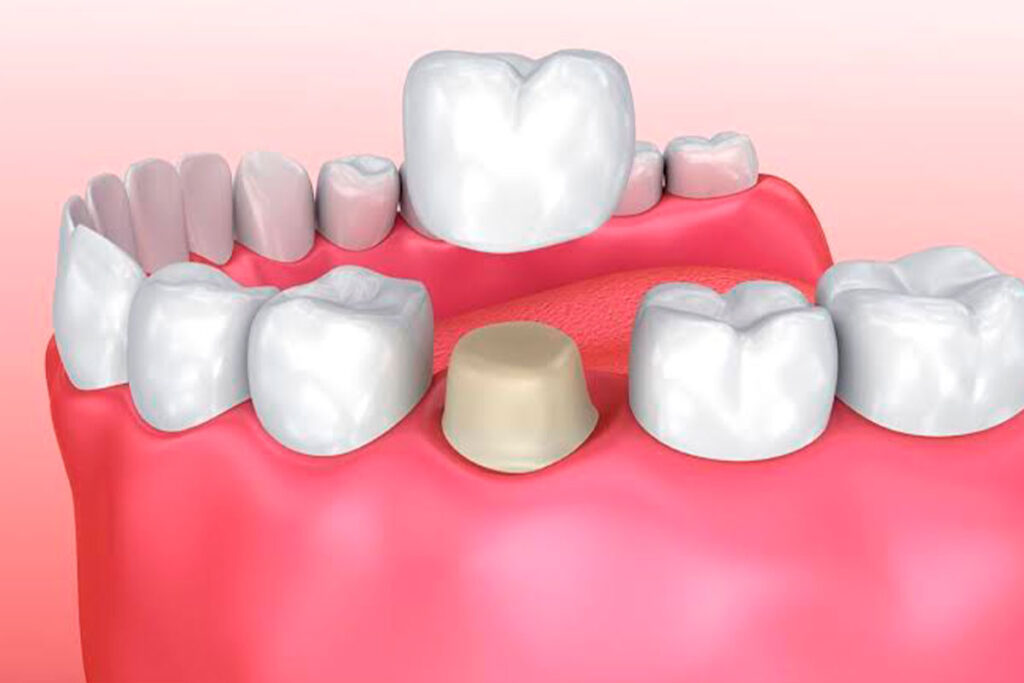
There is no universal rule stating that a certain percentage of lost tooth automatically requires a crown. Treatment planning is more nuanced because tooth location, restoration design, cracks, bite forces, pulp status, and remaining walls all interact.
A restorative evaluation commonly considers:
- Remaining healthy tooth structure: the amount, thickness, location, and continuity of enamel and dentin that can support the final restoration.
- Existing fillings and weakened cusps: large restorations may leave portions of a posterior tooth with less structural support, particularly when several surfaces are involved.
- Cracks or fractures: the depth, direction, symptoms, and location of a crack can substantially change treatment planning.
- Functional load: molars typically experience different chewing forces from anterior teeth, while clenching or grinding can increase mechanical demands.
- Pulpal and endodontic history: a tooth that has undergone root canal treatment requires restorative planning based on its remaining structure and clinical condition.
- Ability to isolate and restore the tooth predictably: decay extending below the gumline, limited remaining walls, or other biological factors may influence whether the tooth can be restored successfully.
How Much Healthy Tooth Structure Remains?
Remaining tooth structure is one of the most useful concepts for understanding when does a tooth need a crown. The long-term behavior of a restoration depends partly on the structure that supports it. Dentistry cannot treat enamel, dentin, cusps, and remaining walls as interchangeable simply because they all appear as part of the same tooth.
A 2025 systematic review examining endodontically treated teeth found that prognosis was closely related to the amount and configuration of remaining coronal structure. Teeth with greater structural loss appeared to benefit more from cuspal coverage over longer follow-up periods, while teeth with more preserved structure could perform well with bonded direct restorations in selected cases. The authors also noted heterogeneity and limitations in the available evidence, which is why treatment decisions still require case-specific judgment.
For patients, the practical meaning is simple: the recommendation should be based on the actual condition of the tooth rather than the assumption that every large filling eventually becomes a crown.
When Does a Large Filling Need to Be Replaced With a Crown?
A large filling may need a different restorative approach when the remaining tooth can no longer support another direct restoration predictably. This does not mean that a specific filling size automatically triggers crown treatment. The location of the filling and the condition of the surrounding cusps are often more clinically meaningful than a percentage alone.
Posterior teeth with restorations involving several surfaces can be especially challenging because chewing forces repeatedly act on the remaining cusps. Research examining teeth with mesial-occlusal-distal structural loss has identified significant concern about cusp fracture and has explored both crowns and onlays as methods of providing coverage. Evidence comparing those options remains limited, which further supports individualized planning rather than a universal rule.
Structural risk may become more relevant when:
- A filling occupies a substantial portion of the chewing surface and one or more cusps have become thin or undermined.
- Recurrent decay has developed around or underneath an older restoration, requiring additional tooth structure to be removed.
- A section of the tooth has fractured, leaving the remaining anatomy less capable of distributing chewing forces.
- Cracks extend through areas that receive functional pressure and require protective coverage.
- Repeated restoration replacement has progressively reduced the amount of healthy natural structure available.
Does Every Root Canal Tooth Need a Crown?
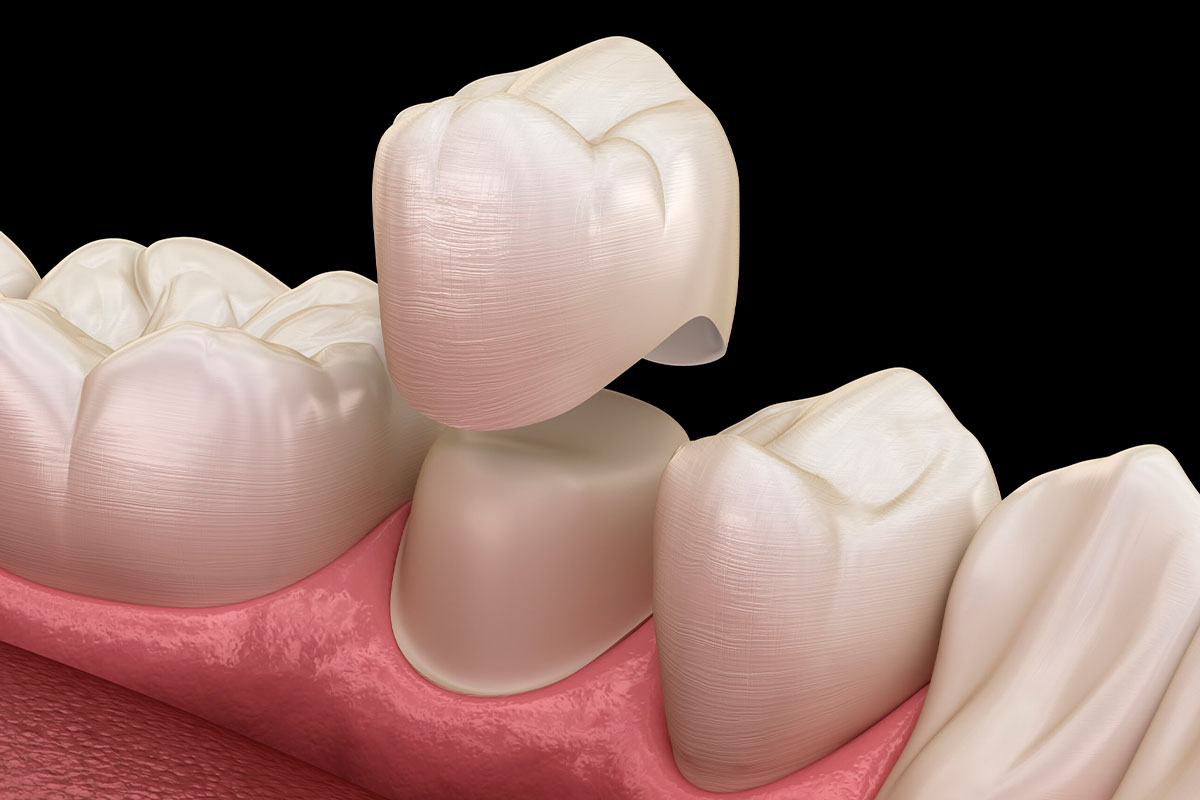
No. A root-canal-treated tooth does not automatically require a crown in every clinical situation. The restorative plan depends on where the tooth is located, how much natural structure remains, what restorations were already present, the pattern of structural loss, and the forces that tooth experiences.
Posterior teeth often require particular attention because premolars and molars typically absorb significant chewing forces. When substantial coronal structure has been lost, cuspal coverage may provide a mechanical advantage. A systematic review of root-filled posterior teeth found that outcomes were influenced by the amount of remaining coronal tooth structure and the type of restoration used.
Anterior teeth can present a different restorative situation because their anatomy and functional demands differ. Some may be restored more conservatively when sufficient healthy structure remains, while others may need greater coverage because of fractures, extensive restorations, aesthetic concerns, or structural weakness.
This is why Dr. Pedro Ramirez’s role in treatment planning is more important than applying a predetermined formula. Nuvo Dental identifies Dr. Ramirez as its founder and Doctor of Dental Medicine, with dental education from the Autonomous University of Santo Domingo and Boston University and continuing education across several areas of dentistry.
Planning Dental Crown Treatment in Orlando
Patients searching for when does a tooth need a crown are often trying to understand a recommendation they have already received. That is an important moment to obtain a complete explanation rather than treating crown placement as an automatic next step.
At Nuvo Dental in Orlando, the goal of restorative evaluation is to determine what the tooth requires based on structural condition, function, previous treatment, and available restorative options. When greater coverage is appropriate, a Dental Crown can become part of a plan designed to restore a damaged tooth while respecting the healthy structure that remains.
If you have a large filling, a fractured tooth, a root-canal-treated tooth, or a restoration that repeatedly causes problems, scheduling an evaluation with Dr. Pedro Ramirez can help clarify whether a crown is appropriate or whether another restorative approach should be considered.
If you’re interested in our services, you can schedule an appointment with us right now and take the first step toward better dental health.
FAQS
Can a cracked tooth be treated without a crown?
Some cracks can be managed with conservative restorative approaches, while others may require cuspal or full coverage. The location, depth, symptoms, pulp condition, and structural consequences of the crack determine treatment. Certain cracks may make the tooth unrestorable, which is why diagnosis comes first.
Is an onlay better than a crown?
Neither option is universally better. An onlay may preserve more natural tooth structure in suitable cases, while a full crown may offer a more appropriate design when damage is extensive or when the remaining structure cannot predictably support partial coverage. Current evidence comparing crowns and onlays in some posterior situations remains limited.
Does every tooth with a root canal need a crown?
No. The final restoration depends on tooth location, structural loss, existing restorations, fracture risk, and remaining tooth structure. Posterior teeth with substantial structural loss often require greater attention to cuspal coverage, while other teeth may be candidates for different restorative approaches.
How large does a filling have to be before a crown is needed?
There is no universal percentage that automatically determines when a filling becomes too large. Dentists evaluate how much healthy structure remains, which surfaces are involved, whether the cusps are supported, the presence of cracks or decay, tooth location, and functional forces.
When does a tooth need a crown instead of a filling?
A tooth may need a crown when too much structure has been lost for another direct filling to provide predictable support, or when weakened cusps, fractures, extensive decay, or other structural concerns make broader coverage appropriate. The decision depends on the amount and location of remaining healthy tooth structure.