
Dental Crown Bite Adjustment
“My new crown looks fine, but when I close my teeth, that tooth seems to touch first.” This is a common way patients describe a bite that feels different after restorative treatment. The sensation may be subtle during normal conversation and become much more noticeable when chewing, clenching, or bringing the teeth together.
A dental crown bite adjustment may sometimes be appropriate when one area of the restoration contacts the opposing tooth more heavily or earlier than intended. Yet a crown that feels unusual after treatment should not automatically be reduced. Recent dental work, temporary tissue irritation, the condition of the underlying tooth, bite forces, or another dental problem can create similar sensations.
At Nuvo Dental in Orlando, Dr. Pedro Ramirez evaluates the restoration together with the tooth, surrounding tissues, and functional bite before deciding what should be changed. That distinction matters because successful crown treatment involves more than how the restoration looks or how precisely it fits around the prepared tooth.
Why Can a New Dental Crown Feel Different When You Bite?
A dental crown replaces the external shape of a tooth, which means its chewing surface becomes part of the patient’s occlusion. Occlusion is the relationship between the upper and lower teeth when they contact during closing, chewing, and jaw movement.
Even small differences in crown contour can be noticeable because teeth and their supporting tissues are sensitive to pressure. A restoration that receives contact slightly earlier than surrounding teeth may create the perception that it is taller, although the physical difference can be very small.
The patient’s awareness can also be temporarily heightened after treatment. Dental anesthesia, recent manipulation of the tooth and gum tissue, or simply paying close attention to a new restoration can make normal contacts feel unfamiliar at first. What matters clinically is whether the sensation improves or whether a persistent pattern of pressure, tenderness, or functional interference develops.

What Does It Mean When a Crown Feels “High”?
When patients describe a crown as “high,” they are often referring to premature occlusal contact. This means part of the restoration may contact the opposing dentition before the surrounding teeth achieve their normal contact pattern.
A premature contact can concentrate force on the restored tooth during closure or chewing. Depending on the situation, the patient may experience a sensation of pressure, tenderness when biting, difficulty finding a comfortable bite, or the impression that the jaw needs to move around the crown to close normally.
Several findings may justify a professional bite evaluation:
- The restored tooth consistently seems to touch before the surrounding teeth when the patient closes normally.
- Chewing pressure produces localized tenderness or a feeling that force is concentrated on the crown.
- The bite feels shifted or uncomfortable several days after treatment rather than gradually becoming less noticeable.
- Side-to-side or forward jaw movements create a new interference around the restored tooth.
- Discomfort is increasing, recurring, or preventing comfortable chewing.
These symptoms indicate a reason for examination rather than proof that the crown is too tall. The dentist still needs to determine whether the contact pattern actually explains the patient’s experience.
How Dentists Evaluate the Bite After Crown Placement
Bite evaluation combines patient feedback with clinical observation. Dentists can use articulating paper, film, shimstock, or other contact-indicating materials to identify where the upper and lower teeth meet. These markings help visualize contact locations but must be interpreted rather than treated as automatic instructions for adjustment.
The dentist may ask the patient to close normally several times and then move the jaw forward or side to side. A crown can appear acceptable during simple closure yet create interference during functional movement, which is why dynamic evaluation can be important.
Dr. Ramirez may also compare the restored tooth with surrounding teeth and consider whether the patient’s reported discomfort corresponds to the observed contact pattern. A dark articulating mark alone does not necessarily mean that area should be reduced; size and intensity of a mark do not provide a complete measurement of actual force.
Contact With the Opposing Tooth
The crown should contact its opposing tooth in a way that supports stable function without creating an isolated overload. Dentists evaluate whether that contact appears consistent with surrounding teeth and with the patient’s usual bite.
The correct relationship varies according to tooth position, anatomy, neighboring restorations, and the overall occlusal scheme. A posterior crown is designed to participate in chewing differently from an anterior restoration, so the clinical context matters.
Side-to-Side and Forward Jaw Movement
Teeth interact differently during movement than they do when the jaw simply closes. A crown that feels comfortable while biting straight down may interfere when the jaw shifts laterally or forward.
These movements can reveal contacts that are difficult for a patient to describe. Evaluating them helps determine whether the restoration is affecting functional pathways or whether the discomfort may have another origin.

Can a High Crown Cause Pain or Sensitivity?
Excessive contact can sometimes create tenderness in the periodontal ligament, the specialized tissue that supports the tooth within the surrounding bone. When a tooth receives more pressure than its neighbors, that tissue can become sensitive during chewing or biting.
The sensation may be described as soreness, pressure, or the feeling that the tooth is being pushed when the patient closes. In some cases, correcting a verified occlusal discrepancy may reduce that mechanical irritation.
Pain after crown placement can have other explanations, which is why the diagnosis should not stop at the bite:
- Pulpal inflammation: the nerve tissue inside the tooth may be irritated, particularly if the tooth required extensive preparation or had pre-existing disease.
- Periodontal irritation: gum or supporting tissues can remain tender after treatment or cementation.
- An underlying crack: structural damage within the tooth can cause biting symptoms that resemble occlusal overload.
- Restorative or cementation issues: margins, retained cement, contact problems, or other restorative factors may contribute to discomfort.
- Referred or adjacent-tooth pain: symptoms perceived around the crown may occasionally originate from another tooth or surrounding structure.
Persistent, severe, spontaneous, or worsening pain deserves professional evaluation. Simply reducing the crown without determining the cause could leave the real problem untreated.
How Long Should a New Crown Feel Different?
There is no single timeline that applies to every patient. A mild awareness of a newly restored tooth can occur shortly after treatment, particularly while local tissues settle and the patient becomes accustomed to the restoration.
What deserves closer attention is the pattern of symptoms. A sensation that steadily becomes less noticeable is different from a crown that consistently strikes first, causes increasing tenderness, or creates difficulty chewing.
Patients should also avoid repeatedly testing the crown by clenching hard or intentionally biting on it to see whether it still hurts. Repeated loading can irritate already sensitive tissues and does not provide useful diagnostic information.
If the bite continues to feel clearly uneven or discomfort persists, a clinical evaluation is more informative than trying to adapt to the sensation indefinitely.
When Does a Crown Need a Bite Adjustment?
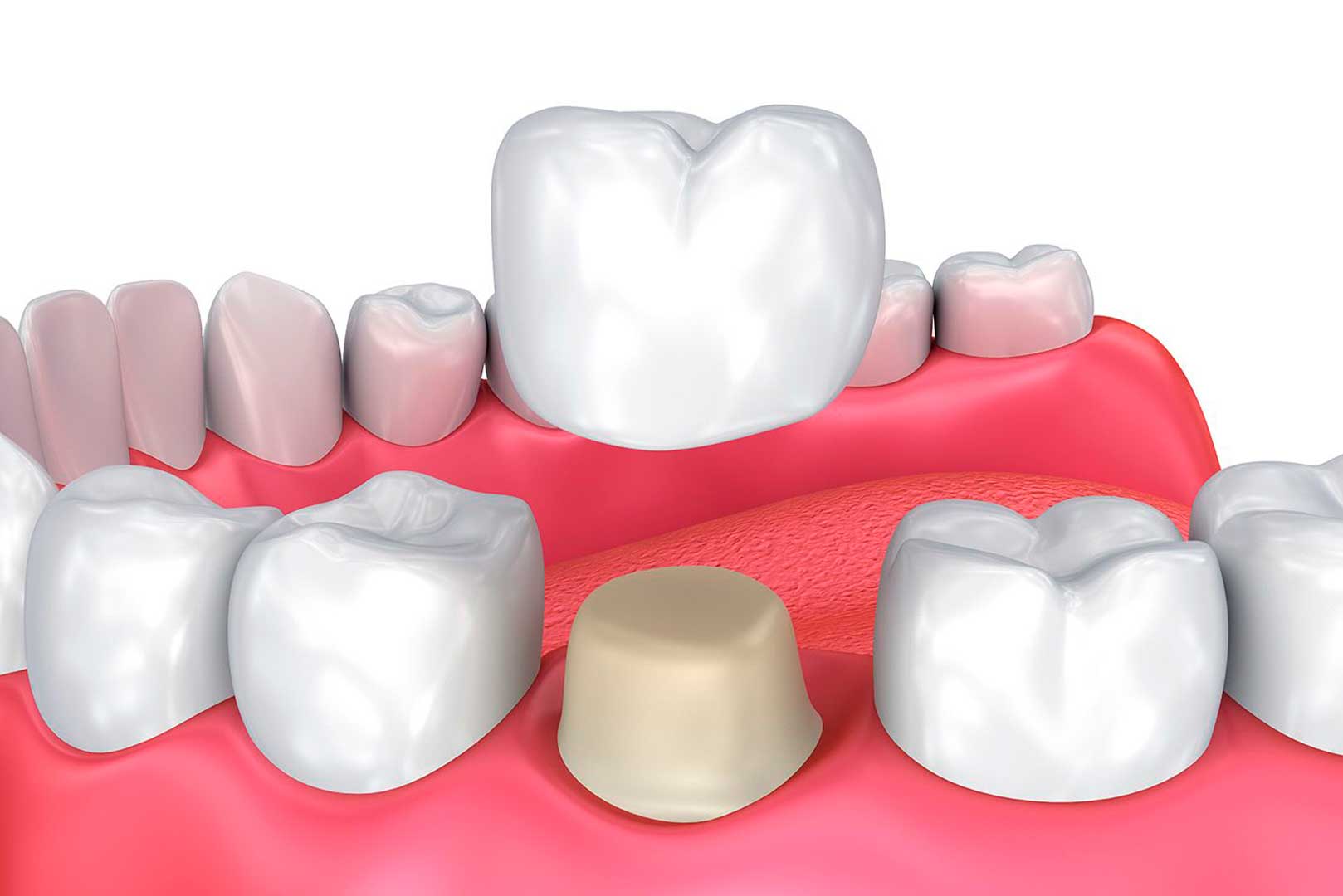
A dental crown bite adjustment is considered when clinical examination confirms that part of the restoration is creating an inappropriate contact or functional interference.
The objective is controlled refinement, not simply making the crown shorter. The dentist identifies the specific area contributing to the problem and adjusts it while preserving the restoration’s intended anatomy and function.
After modification, the surface may need to be polished according to the restorative material. The bite is then reassessed to determine whether the contact pattern has improved and whether surrounding teeth are functioning appropriately.
This is why patients should not attempt to modify a crown themselves. Crown materials are engineered restorative surfaces, and uncontrolled alteration could damage the restoration, affect its anatomy, or create a new functional problem.
Why a Crown Can Fit the Tooth but Still Feel Wrong in the Bite
The fit of a crown and the fit of the bite are related, but they describe different aspects of treatment.
A crown can seat accurately on the prepared tooth, have acceptable margins, and contact neighboring teeth appropriately while still needing occlusal refinement. Marginal adaptation describes how the restoration relates to the prepared tooth. Occlusion describes how that restoration interacts with the opposing dentition and jaw movement.
This distinction is important when evaluating Dental Crowns because quality cannot be reduced to a single measurement. Restorative success involves seating, marginal fit, proximal contacts, contour, material integrity, aesthetics, bite relationships, and the health of the supporting tooth.
Patients may therefore hear that a crown “fits well” while still requiring a small bite adjustment. Those statements are not contradictory; they refer to different clinical dimensions.
Choosing Dental Crown Care in Orlando
Patients usually think about a crown in terms of appearance, strength, or material. Function deserves equal attention. A restoration has to coexist with the opposing dentition every time the patient swallows, chews, or closes the jaw.
Nuvo Dental’s Dental Crowns service can therefore be understood as more than fabrication and placement. Treatment includes evaluating the condition of the tooth, designing the restoration, establishing appropriate contacts, checking the bite, and reassessing the result when symptoms indicate that further evaluation may be useful.
For patients in Orlando whose crown feels high, uneven, or uncomfortable during chewing, an appointment with Dr. Pedro Ramirez can help determine whether the issue is an occlusal discrepancy or whether another dental condition needs attention.
FAQS
Can too much adjustment damage a crown?
Excessive or poorly controlled reduction can alter crown anatomy, compromise material thickness, or create new contact problems. Adjustments should therefore be precise and clinically justified.
How is a dental crown bite adjustment performed?
The dentist identifies specific contact areas using clinical bite-registration methods and patient feedback. If excessive contact is confirmed, a small amount of restorative material may be carefully refined, followed by polishing and another bite assessment.
Does every high-feeling crown need adjustment?
No. The sensation should be evaluated before the crown is modified. The dentist can compare the patient’s symptoms with observed contact patterns and examine the underlying tooth to determine whether adjustment is appropriate.
Can a high crown cause pain when biting?
Yes, excessive occlusal contact can sometimes place additional pressure on the restored tooth and its periodontal ligament, producing tenderness or discomfort during chewing. Similar symptoms may arise from pulpal irritation, cracks, periodontal problems, or other conditions.
Why does my crown feel higher than my other teeth?
A crown may feel high when part of the restoration contacts an opposing tooth before the surrounding teeth complete their normal bite. Recent treatment or temporary tissue sensitivity can also make the area feel unfamiliar, so a clinical examination is needed to determine whether the restoration actually has a premature contact.