
What are dental clips for missing teeth
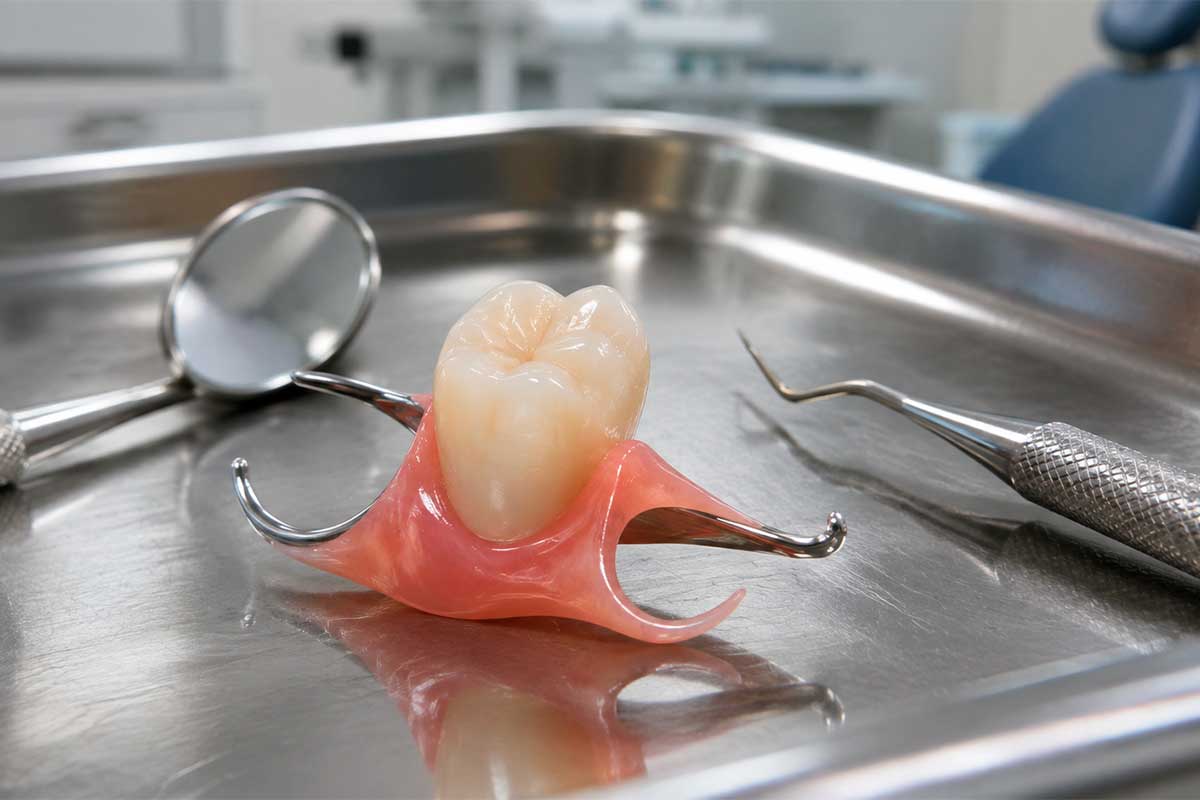
If you have lost one or several teeth, you may have come across expressions such as “dental clips,” “clip-on teeth,” or “teeth that hook onto other teeth.” These phrases are common in everyday searches, but they do not refer to one standardized dental treatment. In many cases, patients are describing some form of removable partial denture that uses clasps or other retentive components to remain stable in the mouth.
Understanding what are dental clips for missing teeth begins with translating that informal language into actual treatment options. A removable appliance can sometimes replace a single missing tooth, several teeth in different areas, or a larger section of the dental arch. Its design depends on which teeth are missing, which healthy teeth remain, gum and bone conditions, bite relationships, and whether the appliance is intended as a temporary or longer-term solution.
At Nuvo Dental in Orlando, Dr. Pedro Ramirez evaluates these factors before recommending a replacement strategy. The objective is not to find a product that simply “clips in,” but to determine how missing teeth can be replaced while considering comfort, stability, hygiene, appearance, and the health of the remaining dentition.

How do removable replacement teeth stay in place?
A removable partial denture must resist movement during speaking, chewing, and normal mouth function. Retention is one part of that process, but support and stability are equally important.
Clasps may engage specific areas of remaining natural teeth to help resist displacement of the appliance. Other components can rest against prepared or naturally favorable areas of teeth to provide support, while the denture base can interact with the gums in regions where teeth are missing.
This is why a partial denture should be individually designed. A clasp placed around an unhealthy or poorly positioned tooth may create a very different clinical situation from a carefully planned appliance supported by stable teeth and healthy periodontal tissues.
Nuvo Dental’s current Dentures & Partials service explains that partial dentures can replace one or more missing teeth while using remaining natural teeth for support and stability. The appropriate option depends on the number of healthy teeth, gum and bone support, and the patient’s goals for comfort and appearance.
How clasps work
A clasp is generally designed to engage a selected contour of a supporting tooth and help the removable appliance resist dislodging forces. The exact shape, material, visibility, and position of the clasp depend on the design of the prosthesis and the anatomy of the remaining teeth.
Patients often imagine a clasp working like a rigid household clip. Dental retention is more nuanced. A removable partial denture must be able to be inserted and removed while remaining sufficiently stable during normal function. That requires careful control of the path of insertion, contact areas, support, and flexibility of the retentive components.
A well-designed partial denture therefore depends on more than how tightly it “grabs” the teeth. Excessive retention is not necessarily better, and the surrounding structures must remain accessible enough for effective cleaning.
Dental flipper vs removable partial denture
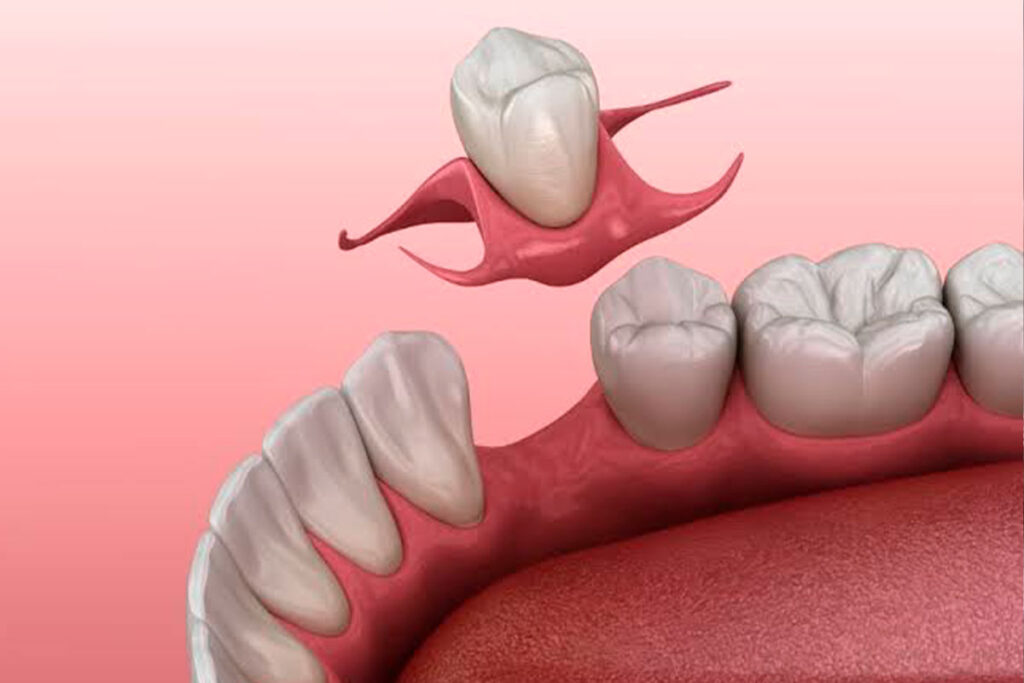
A dental flipper and a removable partial denture can both replace missing teeth, but they are not interchangeable descriptions.
A flipper is often a relatively lightweight acrylic appliance used for selected temporary or transitional situations. For example, a patient may need a visible front tooth replaced while healing occurs or while a longer-term restorative plan is being developed.
A more definitive removable partial denture may involve a carefully designed framework, multiple retentive and supportive components, and a broader consideration of how forces are distributed during chewing. Materials and construction methods can vary substantially depending on the clinical situation.
The important question is therefore not whether a flipper or partial denture is universally better. Treatment depends on how long the appliance is expected to be used, which teeth remain, where the missing teeth are located, how stable the bite is, and what the patient expects from comfort and function.
Can one missing tooth be replaced with a removable appliance?
Yes, a removable appliance can sometimes be used to replace a single missing tooth. Whether that approach makes sense depends on the location of the missing tooth, condition of neighboring teeth, treatment timeline, patient preferences, and whether the appliance is intended as a transitional or longer-term option.
A single missing front tooth presents different aesthetic and functional considerations from a missing posterior molar. The amount of space available, visibility of retentive components, and biting forces can influence the design considerably.
Some patients prefer a removable approach because they are not ready for implant treatment or because another form of treatment is being delayed. Others may ultimately prefer a fixed option after discussing the differences in maintenance, stability, treatment time, and long-term expectations.
Who may consider a clasp-retained partial denture?
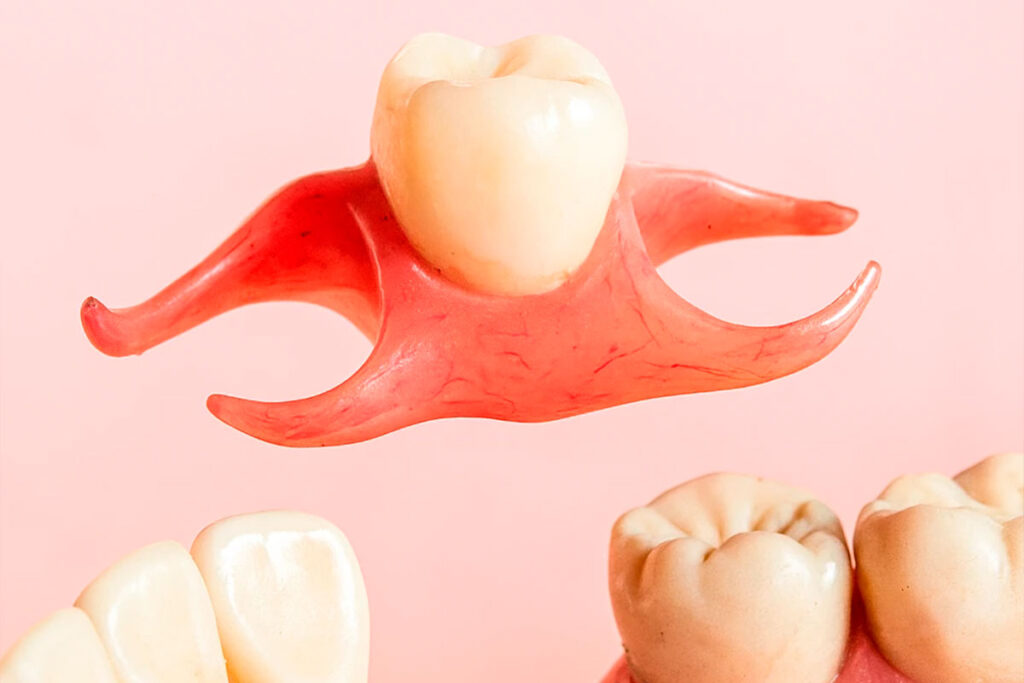
A removable partial denture may be considered when several natural teeth remain and can potentially contribute to support, stability, or retention. Suitability depends on much more than simply counting the number of missing teeth.
During a missing-tooth evaluation, Dr. Pedro Ramirez may consider:
The health of remaining teeth: decay, large restorations, mobility, structural weakness, and periodontal support can influence whether a tooth is suitable to participate in the design.
The pattern of missing teeth: where the spaces are located affects how the appliance can be supported and stabilized.
Gum and bone conditions: the tissues beneath the denture base contribute to comfort and support and may change over time.
Bite relationships: opposing teeth and chewing forces can influence the design and expected performance of the prosthesis.
Patient priorities: removability, aesthetics, cost, treatment time, maintenance, and interest in implants can all influence the final recommendation.
Can dental clasps damage the teeth they attach to?
A properly designed clasp is intended to work with the supporting tooth rather than damage it. Long-term success, however, depends heavily on oral hygiene, periodontal health, appliance fit, design, and regular maintenance.
Removable partial dentures can create areas where plaque and food debris accumulate more easily. Supporting teeth therefore require careful brushing and cleaning around clasp contact areas. Patients also need periodic dental examinations because the fit of the prosthesis and the condition of natural teeth can change.
An appliance that becomes loose, distorted, damaged, or uncomfortable should be professionally evaluated rather than adjusted at home. Changes in gum and bone anatomy can gradually alter how a partial denture sits, even when the prosthesis originally fit well.
Nuvo’s Dentures & Partials service already emphasizes follow-up adjustments and continued monitoring of the gums, remaining teeth, and prosthesis fit.

What does a removable partial denture feel like?
A new removable appliance typically requires an adaptation period. Patients may initially notice increased awareness of the appliance, changes in tongue space, differences in speech, or pressure in areas that are not accustomed to supporting a prosthesis.
Chewing can also feel different during the first days or weeks. Starting with manageable foods and learning how forces are distributed across the appliance can make adaptation easier. A partial denture should become more familiar over time, but persistent sore spots, instability, or difficulty biting deserve professional attention.
Speech often improves as the tongue adapts to changes in the shape of the mouth. The experience varies considerably depending on the size and location of the prosthesis, which teeth are missing, and how much of the palate or other oral structures the design covers.
What to expect during a missing-tooth evaluation at Nuvo Dental
A patient asking about “dental clips” does not need to know the exact prosthetic terminology before scheduling a consultation. The purpose of the appointment is to determine what type of replacement is clinically appropriate.
Dr. Pedro Ramirez can evaluate the missing-tooth pattern, remaining dentition, gums, bite, restorative history, and patient expectations. The conversation can then compare removable partial dentures with other treatment options when appropriate.
Patients may find these questions useful during the consultation:
Would a removable partial denture work for the location and number of teeth I am missing?
Which natural teeth would support or retain the appliance, and are those teeth healthy enough?
Would the clasps be visible when I smile or speak?
Is the appliance intended as a temporary, transitional, or longer-term solution?
How will I clean around the clasps and supporting teeth?
Are fixed or implant-supported alternatives reasonable in my case?
If you liked the article, don’t hesitate to follow us on Instagram to stay updated with the latest news.
FAQS
Are dental clips removable?
Clasp-retained partial dentures are generally removable by the patient. They should be inserted, removed, cleaned, and stored according to professional instructions.
What is the difference between a dental flipper and a partial denture?
A dental flipper is often a simpler removable appliance used in selected temporary or transitional situations. A more definitive partial denture may use a more sophisticated framework and support system intended for longer-term function.
Can a partial denture replace just one tooth?
Yes. A removable appliance can sometimes replace a single missing tooth. The appropriate design depends on the location of the space, neighboring teeth, bite, treatment goals, and whether the solution is temporary or intended for longer use.
What is a clasp on a partial denture?
A clasp is a retentive component designed to engage part of a natural tooth and help the removable appliance remain stable. Its design, position, and material depend on the type of partial denture and the patient’s oral anatomy.
Are dental clips the same as partial dentures?
Often, that is what patients mean, but “dental clips” is not an official dental treatment name. A partial denture is a recognized prosthetic appliance used to replace one or more missing teeth, and some designs use clasps for retention.