
Aging Smile Treatment
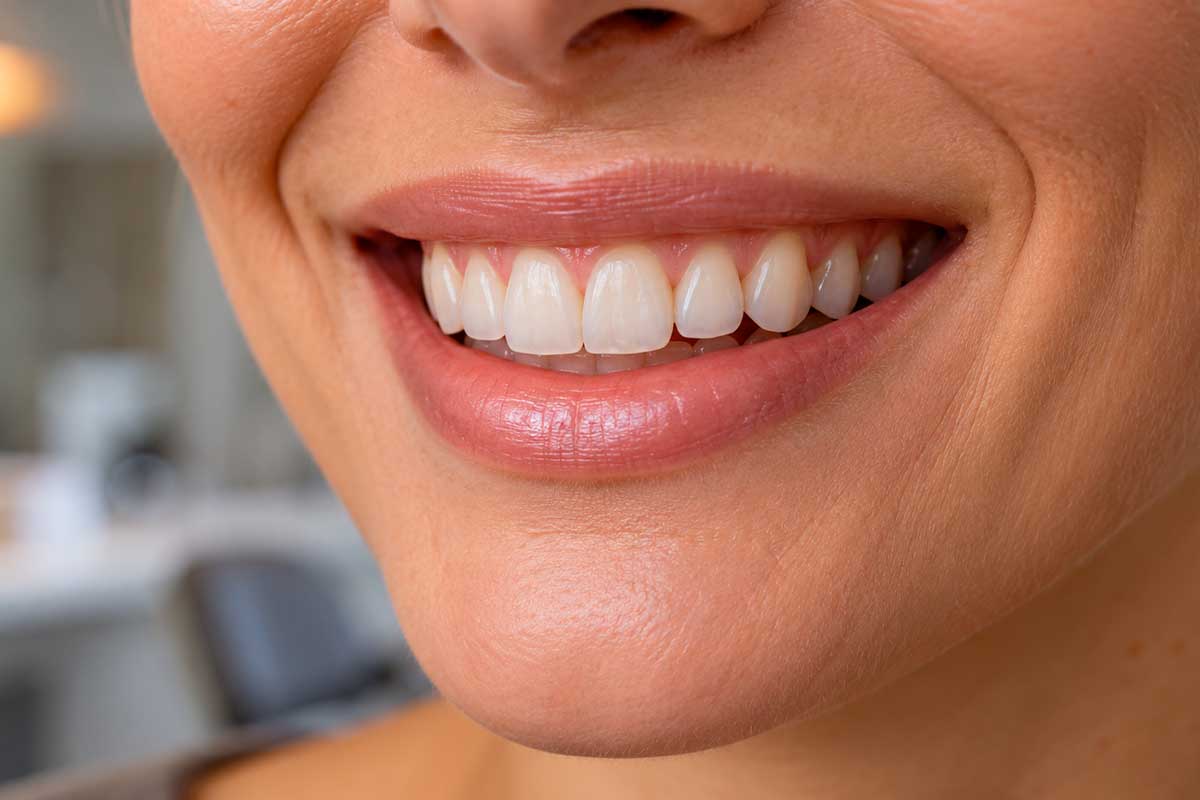
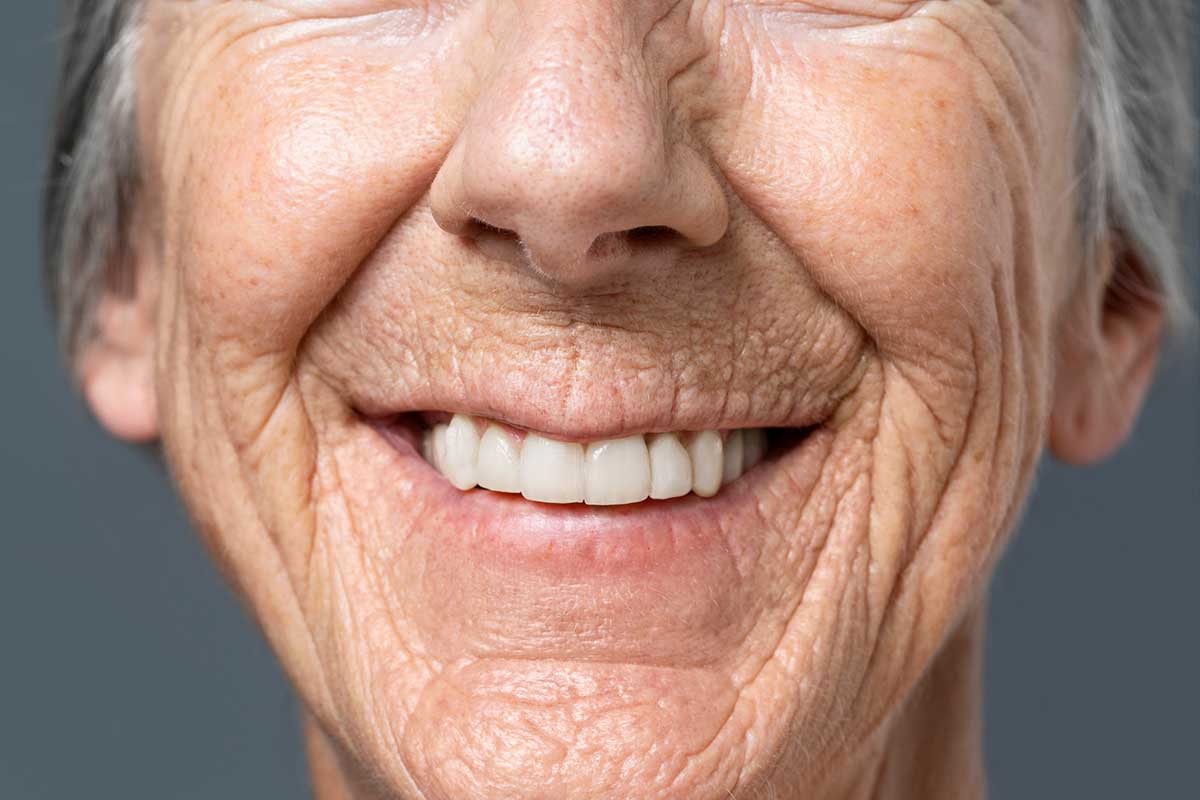
“My teeth are healthy, so why does my smile look older than it used to?” It is a question many adults eventually ask. The change may be subtle: front teeth appear shorter, their color seems darker, less of the upper teeth shows when smiling, or dental work completed years ago begins to stand out against the surrounding enamel.
An aging smile treatment Orlando consultation should begin by identifying which of these changes are actually present. Age itself is not a dental diagnosis, and an older-looking smile is rarely explained by a single feature. Tooth wear, color, incisal length, existing restorations, lip movement, gum relationships, and dental position can each influence how the smile is perceived.
At Nuvo Dental, Dr. Pedro Ramirez approaches cosmetic treatment by evaluating the clinical reason behind the visual concern before choosing a procedure. This creates an important distinction between simply changing teeth and developing a treatment plan that respects existing anatomy, oral health, function, and the patient’s aesthetic preferences.
Why Can a Healthy Smile Start to Look Older?
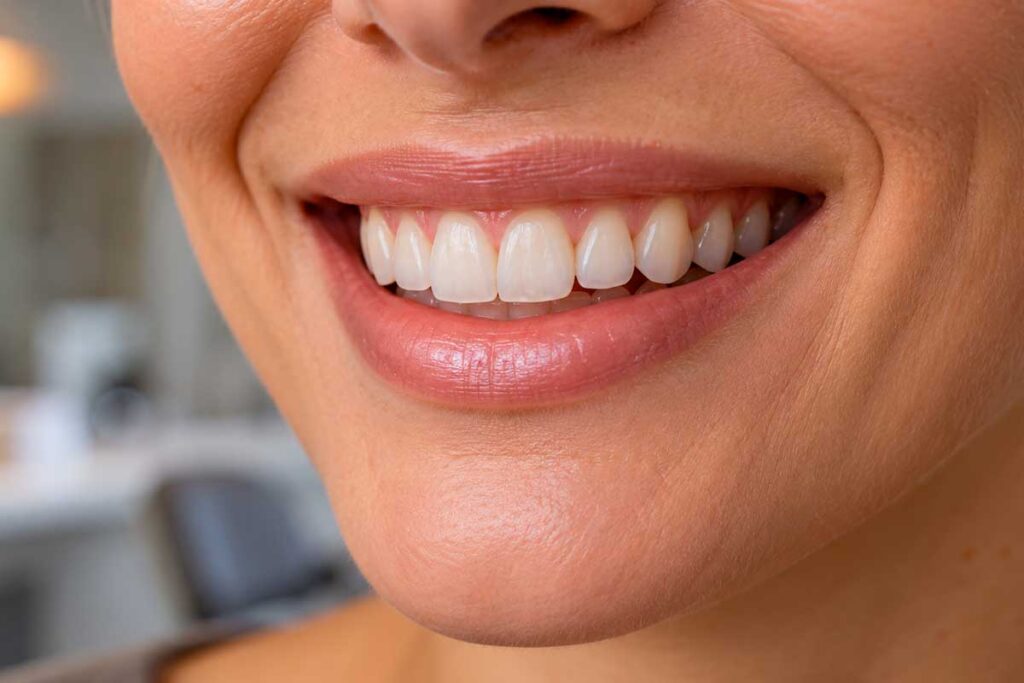
Healthy teeth still change throughout life. Enamel is exposed to years of chewing, dietary acids, brushing, temperature changes, staining compounds, and functional forces. The cumulative effect can influence shape, surface texture, shade, and the relationship between neighboring teeth.
Research has documented age-related trends in tooth wear, darker tooth color, staining, and changes within enamel and dentin. These processes vary considerably between individuals, which is why chronological age alone cannot predict how someone’s smile will look. (pubmed.ncbi.nlm.nih.gov)
The visual impact becomes especially noticeable in the anterior teeth because small differences in length, edge shape, brightness, or symmetry can influence the overall smile. A millimeter of wear that would be visually insignificant on a posterior tooth may become much more apparent at the center of the smile.
What Changes in the Smile as We Age?
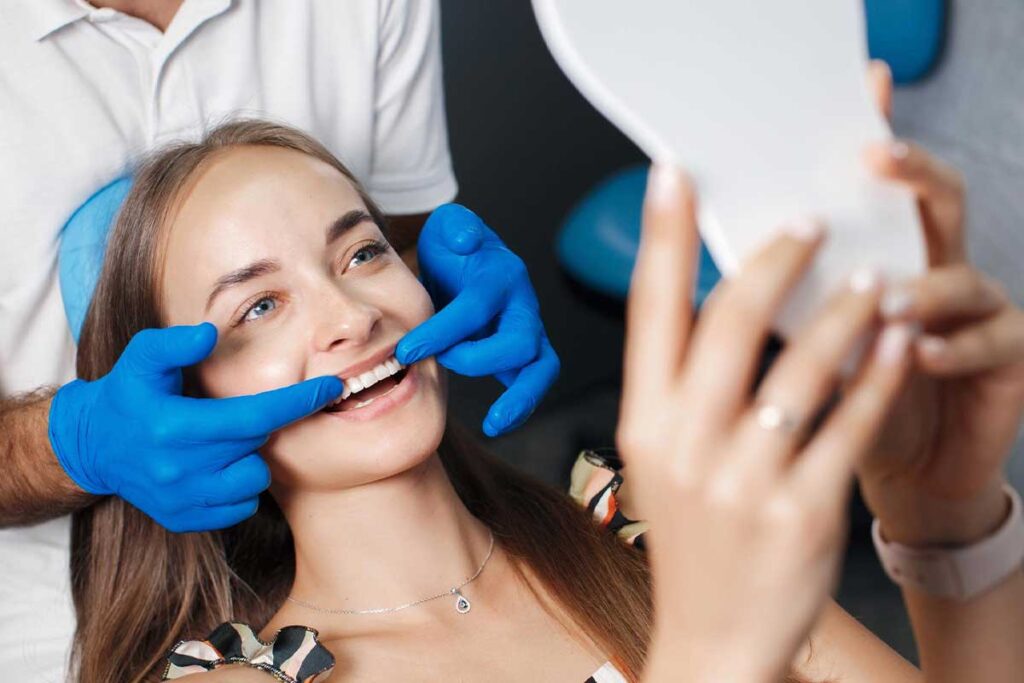
A cosmetic evaluation does not need to treat every age-related change. Its purpose is to identify which features are contributing to the patient’s concern and determine whether intervention would offer a meaningful benefit.
A dentist may evaluate:
Tooth wear and incisal length: flattened or shortened front teeth can alter proportions, symmetry, and the amount of tooth visible during speech and smiling.
Color and translucency: natural teeth can become darker or change in chroma over time, while staining and changes within enamel and dentin can affect brightness.
Upper and lower tooth display: the relative amount of maxillary and mandibular incisor exposure can influence how a smile is perceived.
Older restorations: crowns, bonding, veneers, or fillings may retain a different shade or surface character than neighboring natural teeth as the surrounding dentition changes.
Gingival relationships: recession, contour changes, or uneven gum levels can alter the visual proportions of teeth.
Functional wear patterns: clenching, grinding, bite relationships, erosion, and previous restorative treatment can contribute to changes in shape and length.
Tooth Wear and Loss of Incisal Length
The incisal edges of the front teeth help define tooth length and contribute to the contour of the smile. Over time, wear can flatten these edges, produce small chips, or gradually reduce their height. The front teeth may then appear shorter or more squared than they did years earlier.
Wear deserves a diagnostic explanation before cosmetic material is added. Bruxism, acidic exposure, bite relationships, missing posterior support, habits, and existing restorative work may influence how quickly dental structure is lost. Rebuilding tooth length without evaluating those factors could place the new restoration under the same forces that contributed to the original wear.
For Dr. Ramirez, this makes treatment planning more important than choosing a material first. If a patient wants worn teeth to look longer again, the clinician needs to determine how much length can be restored, whether the bite can accommodate that change, and which restorative approach provides an appropriate balance between aesthetics and preservation of natural structure.
Changes in Tooth Color Are More Complex Than Surface Staining
Teeth do not maintain exactly the same color throughout life. Longitudinal research has demonstrated clinically relevant color changes over periods of several years, with natural teeth changing differently among age groups. These changes can affect the way older restorations match neighboring teeth.
The visual shade of a tooth depends on enamel, underlying dentin, surface characteristics, lighting, hydration, and staining. Enamel can become thinner through wear, while age-related changes also occur within dentin. Research examining adult dentin has identified changes in mineral deposition and mechanical characteristics with age.
This is why a patient who says, “My teeth have become darker,” may need more than a quick shade comparison. The dentist should determine whether the concern comes primarily from external staining, intrinsic color, enamel changes, previous restorative materials, or a combination of factors.
Older Restorations Can Age Differently From Natural Teeth
A crown or veneer does not necessarily change color at the same rate as natural enamel. Composite bonding may develop surface changes over time, while ceramic restorations can retain a shade that increasingly contrasts with adjacent natural teeth.
This can create what might be described as uneven smile aging. The dental work itself may remain functional and clinically acceptable, yet its relationship to the surrounding teeth has changed. A central incisor crown placed many years earlier, for example, may become more noticeable after the adjacent natural tooth darkens.
Replacing a healthy restoration purely for cosmetic reasons deserves careful consideration. The dentist should evaluate its margins, structural integrity, periodontal relationship, shade, contour, and the amount of natural tooth structure that could be affected by replacement. A cosmetic concern should be discussed transparently alongside the biological cost of additional treatment.
Can Worn Teeth Be Made to Look Longer Again?
In selected cases, yes. Bonding, ceramic restorations, orthodontic changes, or other restorative approaches can sometimes recreate lost tooth length. The appropriate option depends on the amount of wear, remaining structure, functional forces, desired change, and condition of the bite.
Restoring length is not simply an aesthetic exercise. The dentist must determine whether new material will have enough functional space and whether the proposed contours will interfere with normal tooth contacts or jaw movement.
For minor wear, a conservative additive approach may sometimes provide enough change. Extensive structural loss can require broader restorative planning. The difference becomes clear during examination, which is why treatment should be based on the present condition rather than on a standardized “smile rejuvenation” package.
How Dentists Decide Which Changes Are Worth Treating
A cosmetic evaluation should separate changes that bother the patient from variations that are healthy and do not need correction. Natural asymmetry, subtle texture differences, and age-appropriate characteristics can contribute to a believable smile.
Dr. Ramirez can evaluate the patient’s priorities alongside structural findings, oral health, existing dentistry, and functional conditions. The treatment plan should then focus on the concerns that can realistically be improved without creating unnecessary intervention.
The decision may involve several possibilities:
Color-focused concerns: professional whitening may be considered when natural tooth discoloration is the dominant issue and the existing restorations do not create significant matching problems.
Worn or shortened teeth: bonding, veneers, or restorative treatment may be evaluated according to remaining tooth structure, wear pattern, bite, and the amount of length that needs to be restored.
Alignment or proportion concerns: orthodontic movement, selective restorative changes, or a staged approach may offer a more conservative solution than changing several teeth restoratively.
Aging restorations: replacement may be discussed when color, contour, structural integrity, or margins justify intervention, rather than replacing dental work simply because it is old.
FAQS
What is aging smile treatment?
Aging smile treatment describes cosmetic or restorative dental care directed at changes such as tooth wear, color differences, shortened incisal edges, older restorations, changes in tooth display, or alignment concerns. It is not a single procedure. The appropriate treatment depends on which features are contributing to the patient’s concern.
Can whitening make my smile look younger?
Whitening can improve the brightness of natural teeth when discoloration is a major concern. It does not restore lost tooth length, change ceramic restorations, correct alignment, or repair worn edges. Its value depends on what is actually affecting the appearance of the smile.
Why do my old crowns look different from my natural teeth now?
Natural tooth color can change over the years, while ceramic restorations may remain relatively stable. This can gradually create a visible shade difference even if the crown itself remains clinically functional.
Can worn front teeth be restored without veneers?
Sometimes. Direct bonding or another additive restorative technique may be appropriate when wear is limited and clinical conditions are favorable. More extensive wear may require a different restorative plan. Tooth structure, bite, available space, and the cause of the wear all influence treatment selection.
Does less upper-tooth display make a smile look older?
Research suggests that incisor display can influence perceived age. A 2026 study found increased mandibular incisor exposure was associated with an older perceived age, while greater maxillary incisor exposure received higher attractiveness ratings. This does not mean tooth display alone determines facial age, but it can influence smile perception. (pubmed.ncbi.nlm.nih.gov)