
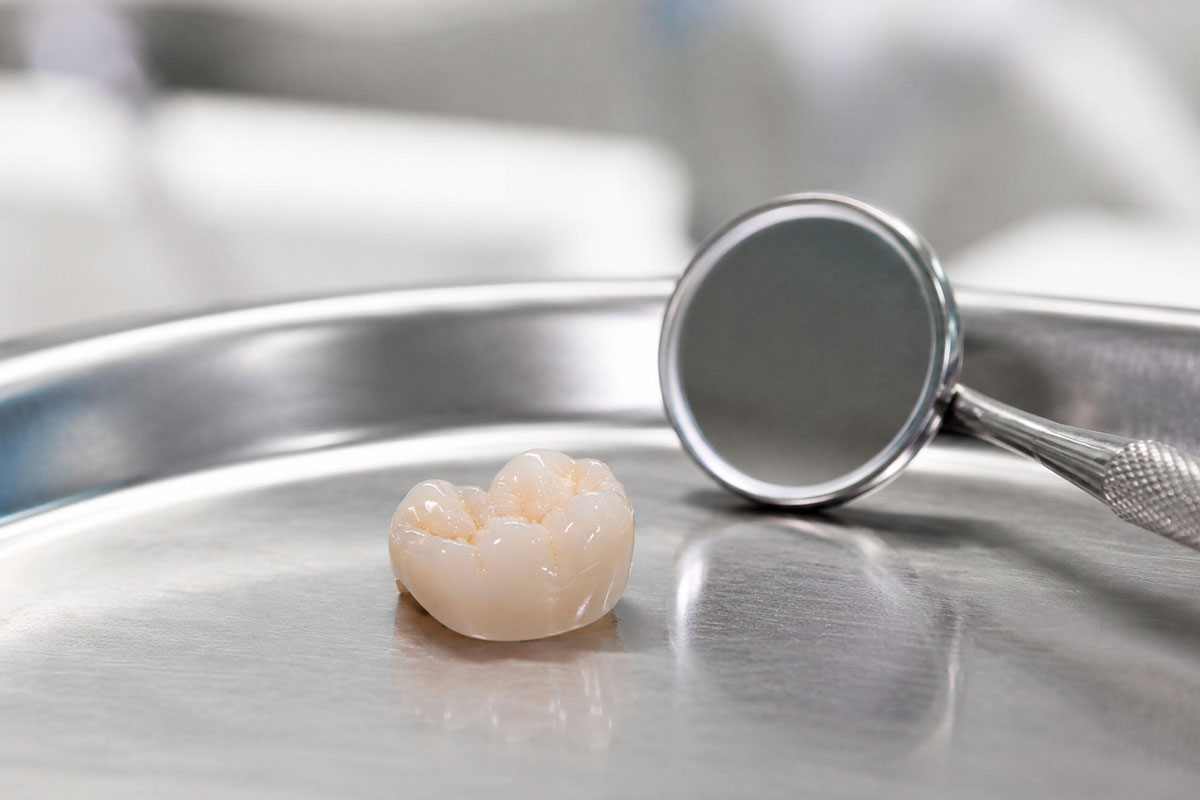
Cracked Tooth Repair in Orlando
A cracked tooth can create an unusual kind of uncertainty. Some people feel sharp pain every time they bite, others notice sensitivity to cold or heat, and some discover a visible fracture without experiencing significant discomfort. These differences matter because pain intensity alone cannot determine how seriously a tooth has been damaged.
The right approach to Cracked Tooth Repair in Orlando begins by identifying what has fractured, how far the damage extends, and whether enough healthy tooth structure remains to support a predictable restoration. A crack does not automatically mean that the tooth must be extracted. At the same time, placing a crown over every damaged tooth without establishing its restorability would overlook important biological and structural factors.
According to the American Association of Endodontists (AAE), cracked teeth can produce erratic pain while chewing, discomfort when biting pressure is released, and sensitivity to temperature changes. Symptoms may come and go, which can make the affected tooth difficult to identify. The type, location, and extent of the crack ultimately influence both treatment and prognosis.
A Cracked Tooth Does Not Automatically Mean Losing It
Teeth can fracture after trauma, years of repetitive loading, biting something unexpectedly hard, or structural weakening associated with previous restorations. A tooth containing a large filling, for example, may have considerably less natural structure available to distribute chewing forces than an intact tooth.
The term «cracked tooth» also covers several clinically different situations. A superficial craze line in enamel is fundamentally different from a fractured cusp, a crack progressing toward the root, or a split tooth. The AAE separates cracked teeth into categories because each presents different treatment possibilities and prognoses.
This distinction is especially important for patients who assume that any visible line means extraction. Modern restorative dentistry can preserve many damaged teeth, but preservation needs to be biologically and mechanically reasonable. The objective is not simply keeping a tooth in the mouth; it is determining whether that tooth can continue functioning predictably after appropriate treatment.
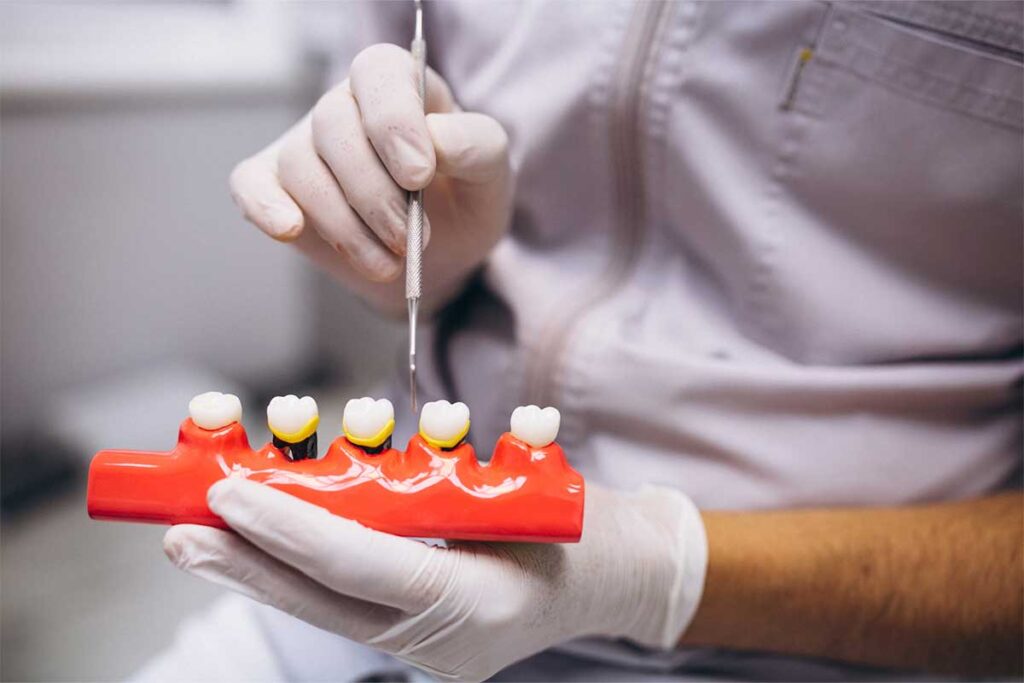
How Dentists Evaluate Cracked Tooth Repair in Orlando
Diagnosing a cracked tooth can be more complicated than identifying a cavity or a missing filling. The crack itself may be difficult to visualize, and conventional imaging does not necessarily reveal its complete trajectory. AAE clinical literature describes cracked teeth as a diagnostic challenge because symptoms can be vague and available imaging modalities have limitations.
A comprehensive assessment may therefore combine the patient’s symptoms with clinical examination and diagnostic testing. Instead of asking only whether a crack exists, the dentist is trying to determine whether it affects structures that influence the long-term restorability of the tooth.
Important factors may include:
- The location, direction, and apparent depth of the crack, together with the amount of sound tooth structure that remains.
- Pulpal symptoms, periodontal findings, previous restorations, and diagnostic imaging when clinically indicated.
- Occlusal forces and overall restorability, including whether the remaining tooth can support the proposed restoration under normal function.
A diagnosis cannot always be reduced to a single radiographic finding. The AAE discusses clinical methods including bite testing, periodontal probing, transillumination and magnification as part of cracked-tooth assessment, while advanced imaging can provide additional information in selected cases.
Can a Dental Crown Actually Save a Cracked Tooth?
The accurate answer is: sometimes, depending on the diagnosis.
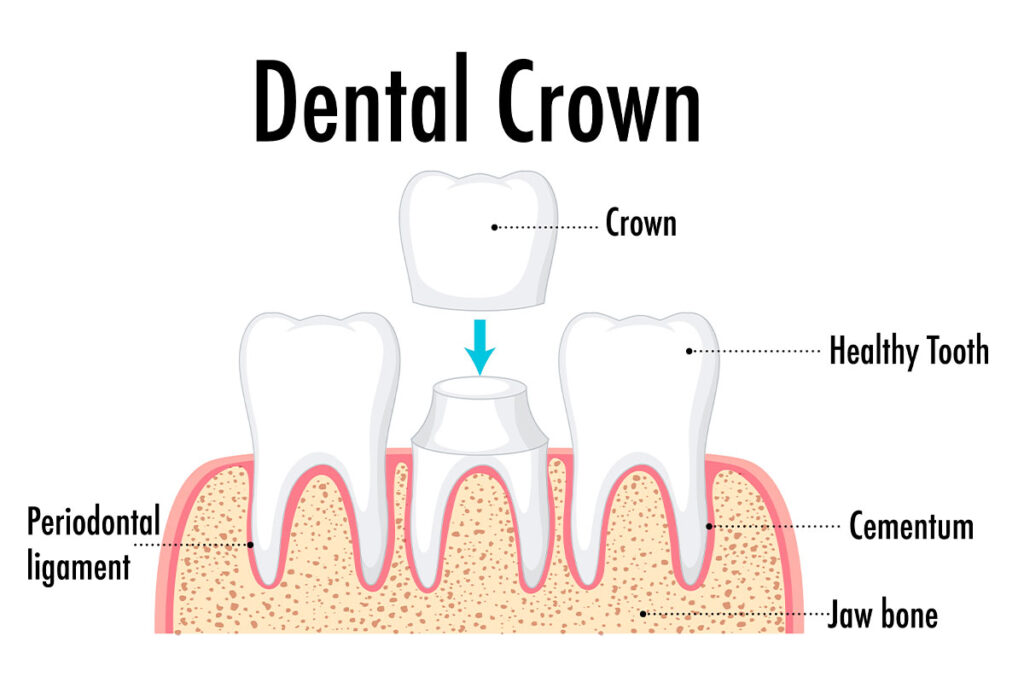
A dental crown covers the prepared portion of a tooth and can restore anatomy while helping protect weakened remaining structure. The American Dental Association’s patient education resources describe crowns as an option for protecting weak teeth from breaking and restoring teeth that have already broken.
This makes Dental Crowns highly relevant to cracked-tooth treatment, but the sequence of decision-making matters. The dentist first needs to determine whether the tooth is restorable and whether the dental pulp, root, periodontal support, or other structures have been affected. The crown is then considered within that diagnosis rather than being treated as an automatic solution.
A fractured cusp around an existing filling, for instance, may sometimes be restored without major pulpal involvement. The AAE notes that fractured cusps rarely damage the pulp and may be treated with a new filling or crown depending on the circumstances. A more extensive crack reaching the pulp creates a fundamentally different clinical situation.
When a Cracked Tooth May Need Endodontic Treatment First
A dental crown and root canal treatment perform different jobs. A crown addresses the structural restoration of the tooth, while endodontic treatment addresses damaged or diseased pulp when such treatment is clinically indicated.
The pulp is the soft tissue inside the tooth containing nerves, blood vessels, and connective tissue. When a crack extends sufficiently deep, movement of the cracked portions during chewing can irritate this tissue. The AAE explains that progressive pulpal damage can eventually result in spontaneous pain or infection involving surrounding tissues.
When the pulp has been affected, Endodontics may therefore become part of the treatment sequence before the definitive restoration. The AAE states that a cracked tooth extending into the pulp may be treated with root canal therapy followed by a crown intended to protect the tooth from further crack propagation.
This is why determining treatment from appearance alone is unreliable. Two teeth may show similar external fractures while requiring different management because their internal tissues, roots, periodontal support, and remaining structure are different.
Can a Crack Become Too Severe for a Dental Crown?
Yes. A crown provides structural coverage, but it cannot make every fracture restorable. Certain cracks can extend into locations where the prognosis changes substantially, and a split tooth represents a different condition from an incomplete crack.
The AAE notes that an untreated cracked tooth can progressively worsen and that a split tooth cannot be saved intact. Its patient guidance also emphasizes that a crown offers substantial protection after treatment but cannot guarantee success in every cracked-tooth case. Unlike a fractured bone, a crack in a tooth does not biologically heal back together.
Clinical research continues to refine which cracked teeth can be preserved. AAE professional literature has reported favorable outcomes in selected endodontically treated cracked teeth, including some cases with deeper crack extension, reinforcing why prognosis should be established individually rather than assuming that every deep crack automatically requires extraction.
Symptoms That Deserve a Professional Evaluation
One of the most misleading characteristics of cracked teeth is that symptoms are inconsistent. A person can experience intense pain while biting one day and almost nothing the next. Another tooth may remain relatively comfortable while structural damage progresses.
Consider arranging an evaluation when you experience:
- Sharp or unpredictable pain when chewing, particularly pain associated with biting or releasing pressure.
- New or persistent sensitivity to hot or cold, especially when it is localized to a specific area or becoming more noticeable.
- A visible fracture, missing piece of tooth, damaged restoration, or sudden change in the way the tooth feels when you bite.
The ADA identifies fractured teeth among possible causes of dental sensitivity, while the AAE recommends professional evaluation for ongoing tooth pain and cracked-tooth symptoms.
How Dr Pedro Ramírez Approaches Restorability at Nuvo Dental
At Nuvo Dental, the decision to restore a damaged tooth begins with understanding the complete clinical situation. Dr. Pedro Ramírez evaluates the condition of the tooth in relation to its remaining structure, symptoms, function, restorative history, and diagnostic findings before determining which treatment is appropriate.
This distinction protects patients from a procedure-first mentality. A crown may be highly appropriate for one fractured tooth, while another may require endodontic treatment before restoration. A different fracture may have a prognosis that requires discussing other treatment possibilities. Patients can review Dr. Pedro Ramírez’s professional profile as part of Nuvo Dental’s commitment to transparent clinical information.
The treatment objective is to preserve natural structure when clinically viable while creating a restoration capable of handling the functional demands placed on the tooth. That requires understanding the damaged tooth before designing what will cover or restore it.
Dental Crowns at Nuvo Dental: Restoring Strength and Function
At Nuvo Dental, Dental Crowns are considered within an individualized restorative plan rather than offered simply because a tooth appears damaged. When a cracked or fractured tooth is clinically restorable and a crown is indicated, treatment planning considers the remaining structure, functional demands, bite, and the appearance of the final restoration.
A successful restoration also needs to work as part of the patient’s bite. Posterior teeth experience substantial chewing forces, while visible teeth introduce additional aesthetic considerations. Crown design therefore involves more than replacing the missing portion of a tooth; it must recreate appropriate anatomy and functional relationships with neighboring and opposing teeth.
For Orlando patients, this creates a more meaningful reason to choose Nuvo Dental for cracked-tooth evaluation. The appointment begins by determining whether the tooth can be predictably restored and what it requires, rather than assuming that every fracture needs the same procedure.
Conclusion
The most useful question after discovering a cracked tooth is not simply «Do I need a crown?» A better question is «What has been damaged, and is this tooth predictably restorable?» That change in perspective prevents the treatment from being selected before the condition has been properly evaluated.
For Cracked Tooth Repair in Orlando, Nuvo Dental provides patients with a pathway from uncertainty to a personalized restorative decision. If a crown is clinically appropriate, treatment can focus on protecting the remaining structure and rebuilding function. When another procedure is required, the diagnosis guides the treatment sequence instead of forcing the tooth into a predetermined solution.
A crack that currently produces little discomfort still deserves attention if you can see structural damage, have lost part of a tooth, or notice changes while chewing. Scheduling an evaluation allows Dr. Pedro Ramírez and the Nuvo Dental team to determine what treatment, if any, is appropriate while preservation remains a clinical possibility.
If you’re interested in our services, you can schedule an appointment with us right now and take the first step toward better dental health.
FAQS
Can a dental crown stop a crack from getting worse?
A full-coverage crown can provide significant protection to an appropriately selected cracked tooth, but it cannot guarantee that a crack will never progress. The AAE specifically notes that crown placement provides substantial protection while acknowledging that some cracks may continue to progress despite treatment.
Can I need a root canal before getting a crown?
Yes. If a crack has damaged or infected the dental pulp, root canal treatment may be indicated before the tooth receives its definitive restoration. A crown and endodontic treatment address different components of the problem, so one does not automatically imply the other.
Can a cracked tooth heal by itself?
No. Tooth fractures do not heal in the same manner as broken bones. Treatment can stabilize, restore, or protect certain cracked teeth, but the fracture itself does not biologically fuse back together.
Does every cracked tooth need a dental crown?
No. Treatment depends on the type and extent of damage. Minor chips may sometimes be repaired with bonding or another restoration, while structurally compromised teeth may require crowns. Teeth with pulpal involvement may require endodontic treatment, and some severe fractures cannot be predictably restored.
Can a cracked tooth be saved?
Many cracked teeth can be treated, but prognosis depends on the type, location, and extent of the fracture and the condition of the surrounding structures. A fractured cusp has a different prognosis from a split tooth or certain severe root fractures. Professional examination is necessary to determine restorability.