

Dental Implants vs Bridges
Choosing how to replace missing teeth affects not only your smile but also your daily comfort, oral health, and long‑term wellbeing. In this comparison of Dental Implants vs Bridges vs Dentures, Nuvo Dental helps you make an informed decision based on durability, aesthetics, budget, and lifestyle. Each option has its place. The right solution depends on your needs, oral condition, and expectations for confidence, function, and maintenance.

Understanding Each Option: Dental Implants vs Bridges
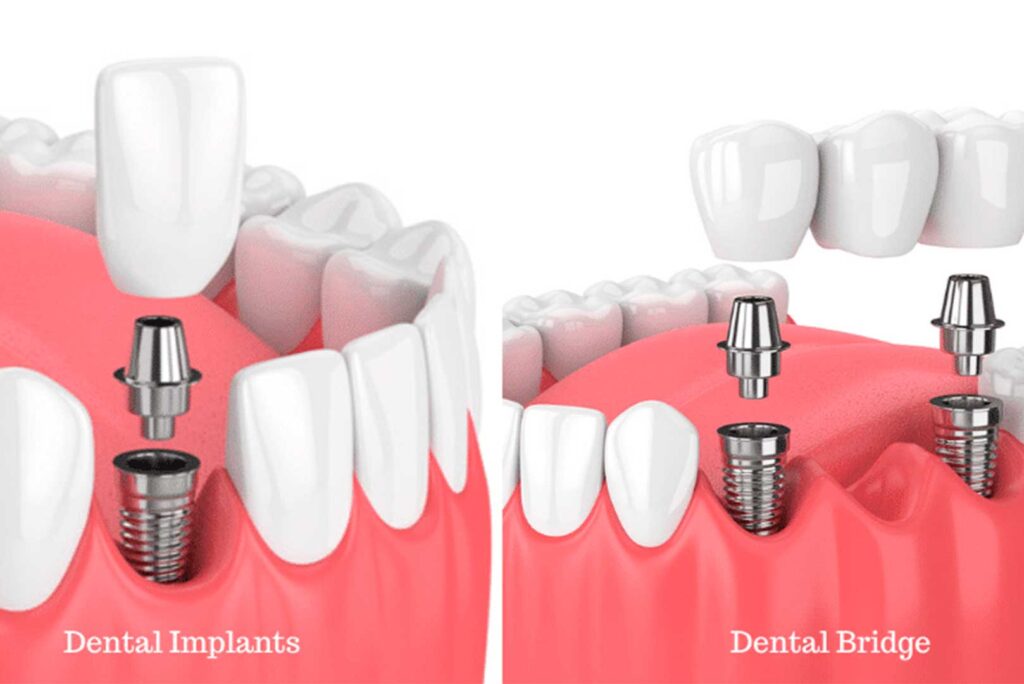
Dental implants are titanium posts surgically placed in the jawbone to support individual crowns or bridge restorations. They are designed to mimic natural roots and preserve bone. Bridges are fixed prosthetic units that span a gap by anchoring artificial teeth to adjacent healthy teeth. This Dental Implants vs Bridges comparison centers on long‑term health, comfort, and convenience.
Durability and Maintenance
Implants integrate into the jawbone, offering long‑term stability and the potential to last a lifetime with proper care. Bridges rely on neighboring teeth for support and may need repeating every 10–15 years due to wear or decay around anchor teeth. Maintenance of implants involves regular brushing, flossing, and professional cleanings—very similar to care for natural teeth. Bridges require extra care around the abutment teeth to prevent complications.
Bone and Tissue Support
Because implants support the bone structure, they help maintain facial features and prevent bone loss over time. Bridges do not stimulate the bone and may allow bone under the emptied space to gradually diminish. Over years, this can affect facial contours and compromise adjacent teeth.
Comfort and Fit
Once healed, implants feel and function very much like natural teeth. With bridges, some patients report that adjacent teeth feel more pressure or sensitivity. Bridges also require reduction of healthy tooth structure for anchoring, while implants preserve nearby teeth.
Bridges vs Dentures: What You Should Know
Bridges and dentures represent interim or less invasive approaches to replacing missing teeth, but they function differently and suit different needs.
Functionality and Stability
Fixed bridges remain in place without daily removal, providing stable chewing ability and speech. Partial dentures are removable and rely on clasps and base support. Many patients find dentures require adjustment periods and may shift during eating or speaking, affecting comfort and confidence.
Cost Comparison
Bridges typically cost less than implants but more than removable dentures. Removable dentures are the most cost‑friendly option initially, but they may require frequent refitting or replacement over time.
Maintenance Lifestyle
Fixed bridges require diligent cleaning around the abutment teeth to prevent decay and gum issues. Dentures must be removed nightly, cleaned, and stored properly. Some wearers need adhesive to maintain a secure fit, which can feel less natural and add maintenance demands.
Dental Implants vs Dentures: Long-Term Investment in Your Smile
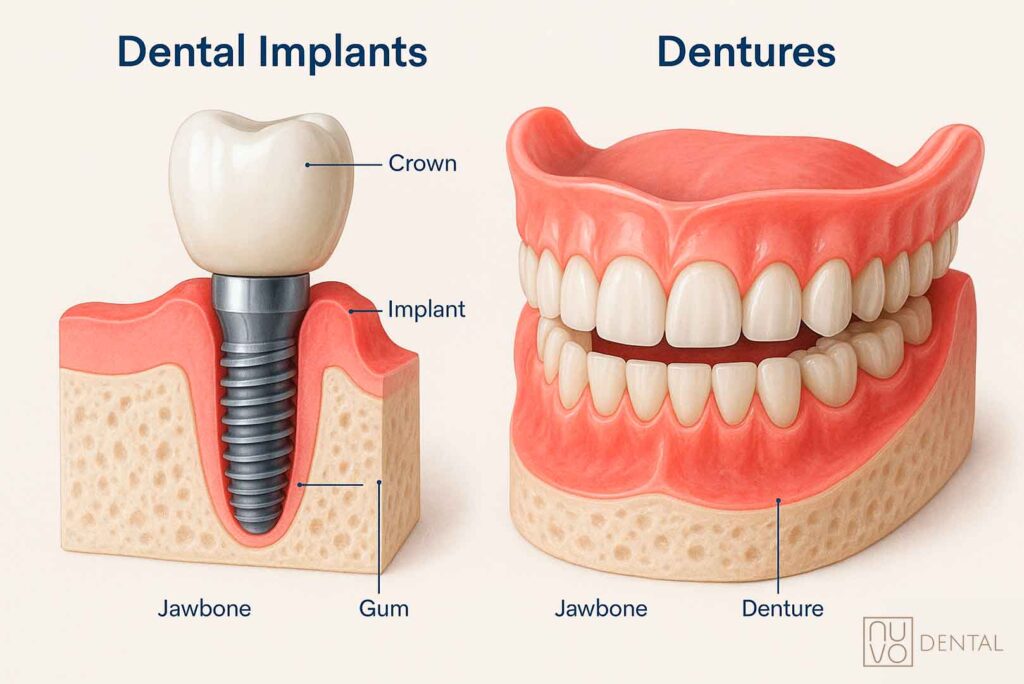
When comparing Dental Implants vs Dentures, implants stand out for their permanence and integration.
Long-Term Value
Implants can last decades and avoid bone loss. Dentures typically last 5–8 years before needing a remake. Over time, implants incur fewer replacement costs and eliminate ongoing adjustments.
Bite Strength and Convenience
Implant‑supported teeth allow you to eat most foods without limitation. Traditional dentures often reduce bite strength, restricting consumers from firm or chewy foods. Daily care for implants matches natural teeth; dentures require nightly cleaning and may loosen without adhesive.
Natural Feel and Appearance
Implants resemble natural teeth visually and functionally, with no visible clasps or movement. Dentures can look less realistic and might shift with jaw movement. Over time, jaw bone remodeling may cause dentures to fit poorly or feel less secure.
Personalized Choices Based on Your Situation
Nuvo Dental’s team evaluates your oral health, bone levels, long‑term goals, and budget to recommend the best solution.
Ideal candidates for Dental Implants are adults with sufficient bone, good overall health, and a desire for a permanent solution. Implants preserve bone and feel natural long‑term.
Bridges work well when adjacent teeth are strong and healthy, offering quick restoration without surgery. They suit patients who prefer a fixed option but aren’t ready for implants.
Dentures serve well when multiple teeth across the arch are missing, or if budget or health constraints prevent surgical placement. Partial or complete dentures offer functionality while preserving remaining teeth.
Nuvo Dental’s Expertise and Approach
At Nuvo Dental, we use advanced imaging to assess bone and gum conditions, enabling accurate planning for implants or bridge placement. State‑of‑the‑art digital impressions ensure precise fit and comfort across all options. Our restorative team guides you through each step—preparation, placement, healing, and follow‑up care. Whether you choose implants, bridges, or dentures, you’ll receive a personalized plan focused on sustainable smiles.
Final Thoughts: Making the Right Choice
Dental Implants vs Bridges offer superior durability, bone health, and long‑term fit, but require surgical placement and greater initial investment.
Bridges vs Dentures offer lower cost and quicker results with bridges feeling more natural than removable options.
Dental Implants vs Dentures show implants excel for chew comfort, stability, and minimal maintenance over time.
Your path to tooth restoration deserves clear options, expert care, and attention to what matters—appearance, function, and peace of mind.
If you liked the article, don’t hesitate to follow us on Instagram to stay updated with the latest news.